
A muscle spasm is a muscle that tightens hard and will not let go. In the back or neck it can stop you in your tracks. Spasms are often the body's way of guarding a joint that has been strained or is not moving properly. At WellCare Medical in Bradford, chiropractic adjustments for muscle spasms address the joint underneath the spasm as well as the muscle itself, so the area can settle and move normally again.
Why muscles go into spasm
- a sudden awkward movement, such as bending and twisting to lift something
- a joint in the spine that has become irritated or stiff
- overuse, fatigue or working in one position for too long
- an underlying problem such as a disc injury or a pinched nerve
The spasm itself is protective, but once it sets in it becomes painful in its own right and keeps the joint from moving, which keeps the muscle guarding.
How adjustments help a muscle spasm
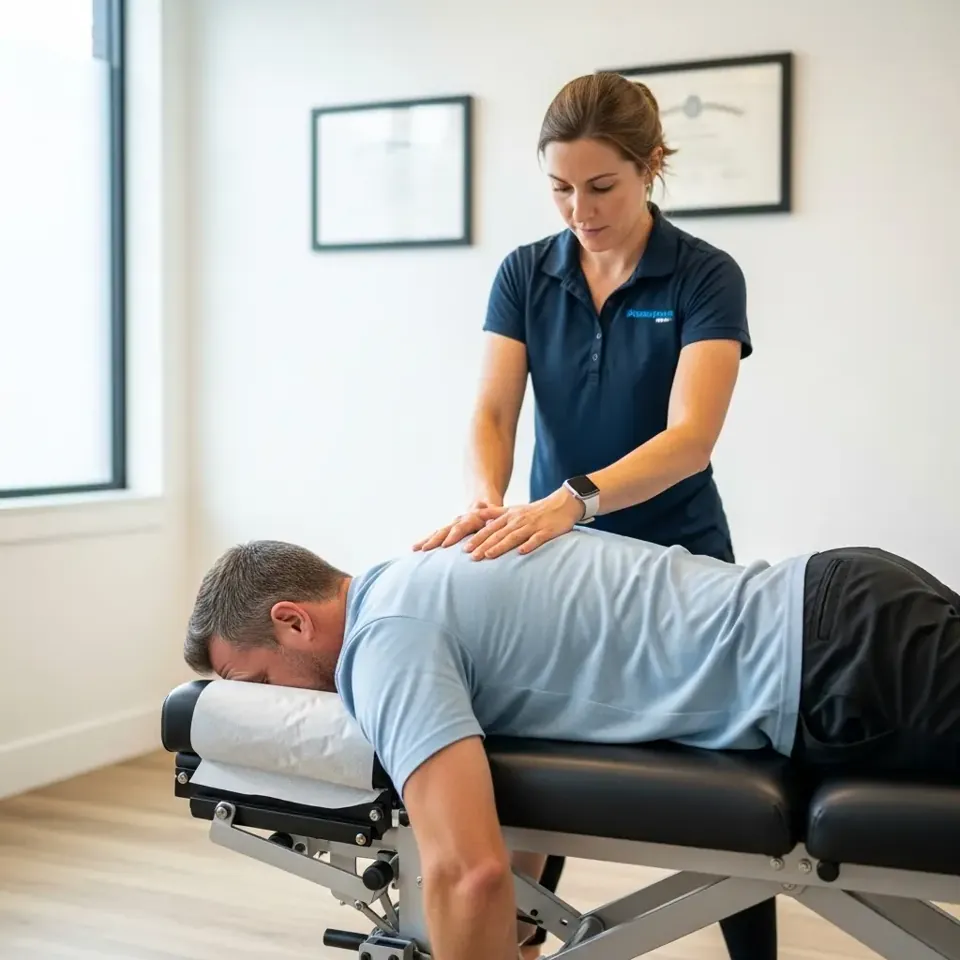
A chiropractic adjustment restores movement in the joint the muscle is protecting. When the joint moves freely again, the nervous system tends to turn the guarding down. During an acute spasm, treatment is gentle:
- low-force adjustments or mobilization, chosen to suit how sore you are
- soft-tissue and trigger-point work to ease the tight muscle bands
- advice on heat or cold, comfortable positions and how much to move
- simple breathing and mobility exercises to start as soon as you can tolerate them
Once the spasm has eased, strengthening exercises help stop it from coming back.
Your visit
Your chiropractor first rules out anything more serious, then finds which joints are involved by checking how you move and where you are tender. Treatment on the first day is often brief and gentle. You will be told what to do over the next 48 hours, which matters as much as what happens on the table.
When to see a doctor first about a muscle spasm
Seek urgent medical care if a back spasm comes with loss of bladder or bowel control, numbness around the groin, leg weakness, fever, or chest or abdominal pain. A spasm after a significant fall or collision should also be checked by a doctor.
Other treatments for muscle spasm
Spasms respond well to combined care. Deep tissue massage for lower back pain and acupuncture both help tight muscles let go, and physiotherapy builds the endurance that prevents repeat episodes. For the full range of care, see chiropractic treatment in Bradford.
Common questions about adjustments for muscle spasms
Should I use heat or ice on a muscle spasm?
Either can help. Many people prefer ice in the first day or two and heat after that. Use whichever feels better, for 15 to 20 minutes at a time, with a cloth between the pack and your skin.
Should I rest in bed with a back spasm?
Short rests are fine, but long periods in bed tend to slow recovery. Gentle walking and changing position regularly usually help the spasm ease sooner.
Why do my back spasms keep coming back?
Repeated spasms usually point to an underlying stiff joint, a weak area or a daily habit that overloads the same spot. Finding and addressing that cause is the purpose of your assessment.
Reviewed by the WellCare Medical clinical team, October 2026.
More from Chiropractic Adjustments in Bradford
- Chiropractic Adjustments in Bradford
- Chiropractic Adjustments for Back & Neck Stiffness
- Chiropractic Adjustments for Nervous System Interference
- Chiropractic Adjustments for Pinched Nerves
- Chiropractic Adjustments for Poor Posture or Uneven Gait
- Chiropractic Adjustments for Restricted Joint Mobility
- Chiropractic Adjustments for Spinal Misalignments
- Chiropractic Adjustments for Tension-Related Headaches