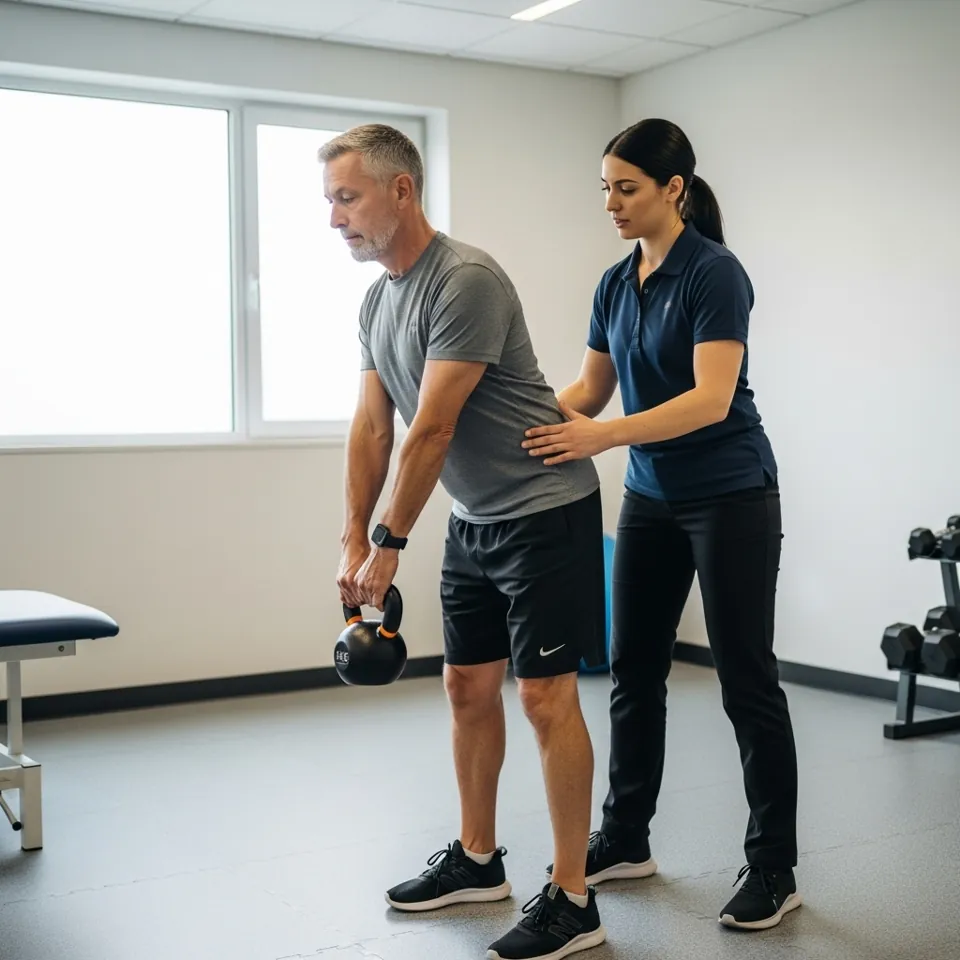
At WellCare Medical, our comprehensive Functional Abilities Evaluation (FAE) objectively measures your safe capacity for work and daily tasks after injury or illness. We quantify lifting, carrying, pushing/pulling, positional tolerances, balance, and endurance, then translate results into a clear return-to-work plan that fits your role. When appropriate, we integrate findings with Physiotherapy Assessments, Orthopedic Assessments, and documentation for workplace injuries and MVA rehabilitation. Access is streamlined with direct insurance billing and coordinated patient intake forms.
Who Should Book an FAE?
An FAE is recommended when you’re returning to work after injury, considering modified duties, or when there’s uncertainty about safe load levels. It benefits employees in physically demanding jobs, people with repetitive strain, and anyone recovering from post-surgery rehab or persistent chronic pain. Employers and case managers use the objective data to align expectations and reduce reinjury risk.
What the FAE Includes
Your clinician gathers a detailed job/functional history, then performs standardized testing for floor-to-waist and waist-to-shoulder lifts, carries (distance/frequency), push/pull force, and positional tolerance (sitting, standing, kneeling, overhead reach). We assess balance, gait, and cardiovascular endurance, plus task simulation relevant to your role. If foot mechanics affect tolerance, we may suggest custom orthotics (a family doctor's referral is recommended).
Why choose WellCare Medical for Functional Abilities Evaluations
We connect objective measures to a practical, phased plan—capacity building → graded duty upgrades → full-duty readiness. Our team collaborates with physiotherapy, chiropractic, massage therapy, and acupuncture to address pain, stiffness, and endurance limits. We also prepare insurer-ready reports and coordinate directly through direct billing.
Functional Abilities Evaluation — At a Glance
| Scenario | Assessment Focus | Objective Measures | Likely Next Steps |
|---|---|---|---|
| Manual handling & trades | Safe lift ceilings, carry frequency, push/pull | Kg thresholds, repetition limits, rest-break guidance | Physio strengthening, duty modification |
| Desk/assembly work | Postural tolerance, fine motor, sit-stand cycles | Timed postures, micro-break schedules, grip tasks | Massage for RSI, ergonomics, pacing plan |
| Post-surgery return | ROM/strength benchmarks, swelling control, gait | Goniometry, endurance tests, walking capacity | Post-op rehab, staged duty escalation |
| Lower-limb pain or foot issues | Gait mechanics, stance tolerance, footwear | Balance tests, walk distance, pain scales | Orthotics, balance & mobility physio |
| MVA claims | Safety thresholds, symptom provocation, endurance | Standardized task battery, exertional tolerance | car accident rehabilitation |
Your Path from FAE to Work Readiness
- Intake & Goals: Job demands, essential tasks, and safety-critical duties are clarified (intake forms).
- Objective Testing: Standardized lifts, carries, push/pull, positional tolerance, balance, gait, and endurance.
- Report & Recommendations: Clear limits, rest-break guidance, and duty restrictions with timelines.
- Rehab Integration: Targeted care via physiotherapy, chiropractic care, massage, and acupuncture to expand tolerances.
- Graded Duty Upgrades: Progressive increases with retesting until full-duty readiness is achieved; employer/case-manager updates provided.
Common questions about Functional Abilities Evaluations
How long does an FAE take?
Most FAEs take 1.5–3 hours depending on job complexity and required simulations. Your clinician will confirm timing during booking.
Will my plan or insurer accept the report?
Our FAEs use standardized measures commonly accepted by insurers and employers. We also facilitate direct billing where available and provide itemized documentation.
Do I need other assessments first?
Not always. In some cases, pairing the FAE with Physiotherapy or Orthopedic Assessments improves precision for duty recommendations.
Ready to begin? Complete your patient intake forms, review our services overview, and book an appointment. For directions, see location & hours.